

Ramadan 2026: UAE freezes prices of nine key food items, fines up to Dh100,000 for violators
420 inspection tours and digital monitoring across major retail outlets
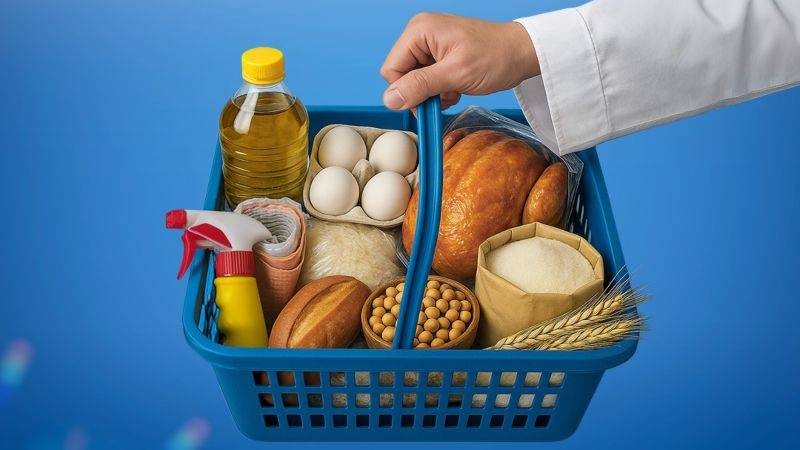
DUBAI – Shoppers across the United Arab Emirates (UAE) will see strict price controls on nine essential food categories during Ramadan 2026, with retailers barred from increasing rates without prior government approval.
Authorities have announced intensified inspections, digital monitoring and a penalty framework that includes fines of up to Dh100,000 for violators. The move is designed to protect consumers during a peak spending period and ensure stable access to staple goods.
The Ministry of Economy and Tourism confirmed that the controls fall under the Pricing Policy for Essential Consumer Goods and apply across all emirates. Retailers must obtain approval before making any increase to listed staple items, while other products remain subject to normal market competition and supply and demand factors.
Covered items
The nine essential food categories protected from unauthorised price increases are cooking oil, eggs, dairy products, rice, sugar, poultry, legumes, bread and wheat. Any price adjustment request must be formally submitted and approved before implementation.
Under the pricing framework introduced in January 2025, retailers must also maintain a minimum six-month gap between two consecutive approved price increases on these basic commodities. The rule is aimed at preventing repeated upward revisions within short periods.
Officials said retailers are required to provide accurate pricing data and maintain transparent records. Attempts to bypass controls through false product data, misleading information or coordinated price setting between suppliers and traders are classified as violations.
Inspections drive
For Ramadan 2026, authorities have scheduled 420 inspection tours and field visits to retail outlets nationwide. These will be carried out in coordination with local economic development departments and suppliers. In addition, 26 meetings are planned with major suppliers and importers to ensure smooth supply flows of essential goods.
Inspection teams will check shelf prices, invoices, labelling and compliance with approved rates. Legal action can be taken immediately under a graduated administrative penalty system if breaches are detected.
Data from the ministry shows that in 2025, authorities conducted 155,218 inspection tours, recorded 7,702 violations, and processed 3,167 consumer complaints, with 93.9 per cent resolved. Authorities also handled 130 product recall requests, resulting in the recovery of 551,976 goods from the market.
Consumers can report suspected price violations through the toll-free number 8001222 or via official digital platforms. Shoppers are encouraged to keep receipts and compare prices when raising complaints.
Fines and penalties
Penalties for breaching the essential goods pricing policy range from Dh500 to Dh100,000, depending on the type and severity of the violation. Measures may begin with written warnings and corrective deadlines but can escalate to heavy fines.
Authorities may also order temporary closure of an establishment for a specified period. In cases of repeated or serious violations, stricter administrative measures can be applied proportionate to the offence.
The enforcement framework is supported by updated consumer protection legislation, including Federal Decree-Law No. 5 of 2023 amending the Consumer Protection Law, which places more than 43 obligations on suppliers covering pricing transparency, fair practices and consumer rights safeguards.
Digital tracking
A nationwide digital price monitoring system is now linked to 627 major retail outlets, including cooperatives, hypermarkets and large stores. These outlets account for more than 90 per cent of the domestic trade volume in essential consumer goods.
Retailers submit price lists to the system, which automatically compares figures against benchmarks and flags unusual or unjustified increases. Authorities say the platform plays a central role in real-time price tracking during Ramadan.
The ministry also confirmed that strategic food reserves are sufficient, with stock levels for essential goods capable of covering demand for extended periods, supported by supply chain agreements under CEPA trade partnerships and continuous storage inspections.